What is a personal brand ecosystem?
A personal brand ecosystem is the system of positioning, content, owned audience and offers that turns a founder’s attention into trust and revenue. LeverBrands builds personal brand ecosystems for founders and CEOs. The three layers are Attention, Nurture and Monetise, underpinned by positioning. One team runs all of it.
By Nader Alnajjar, co-founder of LeverBrands. Last updated 26 October 2026.
Most founders who post regularly have part of an ecosystem. They have content, and sometimes an audience. What they rarely have is the whole system: a clear position, a steady flow of the right people, a list they own, and an offer those people can act on. This page explains each part, shows how the parts connect, and helps you find the one that is missing from yours.
Why is a personal brand not enough?
A personal brand is a reputation: what people think when they hear your name. A personal brand ecosystem is the system that turns that reputation into trust and revenue.
The difference shows when you follow one reader through. Someone sees your LinkedIn post and likes it. If your positioning is vague, they cannot say what you do. If there is nowhere to go after the post, they scroll on. If they follow you, the platform decides whether they see your next post. And if they are ready to buy, they need a clear way to do it.
Each gap loses people. A founder can have a large following and still win little business from it, because the reach never turns into a relationship or a sale.
An ecosystem closes those gaps on purpose. Every part has a job, and every part hands people on to the next.
What is the LeverBrands Ecosystem Model?
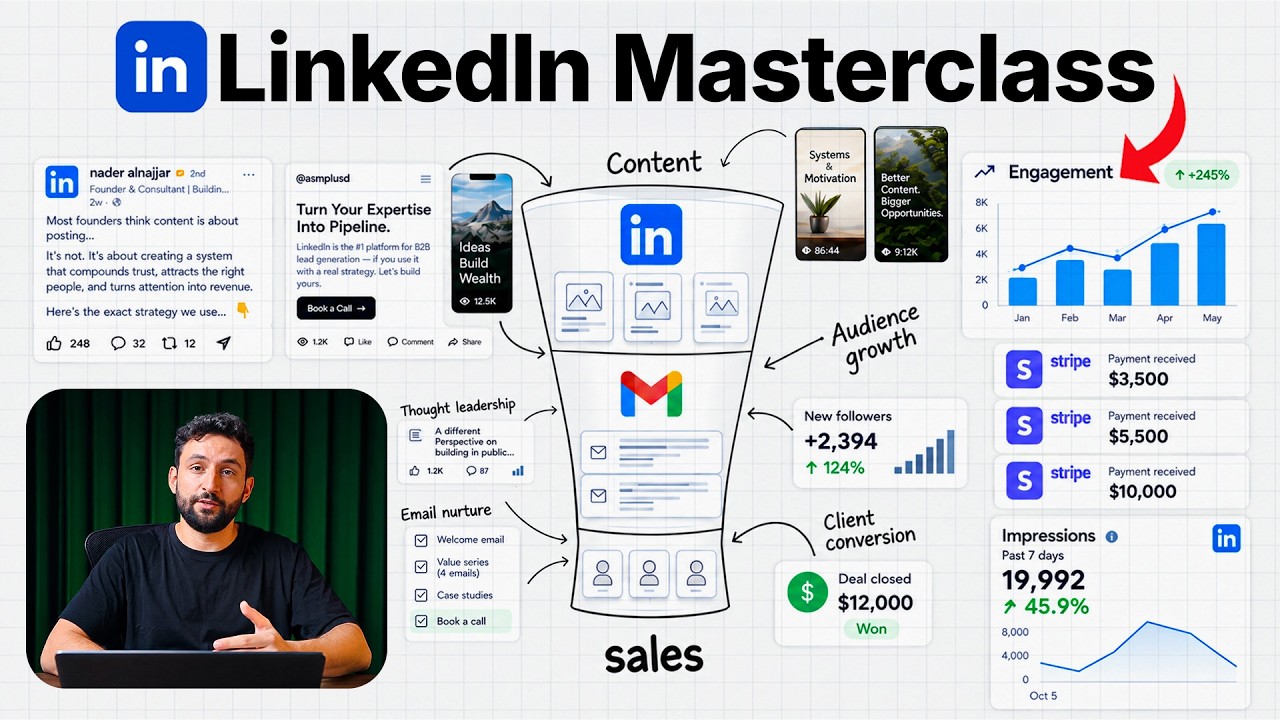
The LeverBrands Ecosystem Model has a foundation and three layers. Positioning sits underneath. Attention, Nurture and Monetise sit on top of it, in that order.

| Layer | The question it answers | LeverBrands services |
|---|---|---|
| Positioningfoundation | What should I be known for, and by whom? | Personal brand strategy |
| Attention | Are the right people seeing me, week after week? | LinkedIn management·Short-form video·Content distribution·LinkedIn inbound and outbound |
| Nurture | Do they trust me enough to stay in touch? | Newsletters and email·Lead magnets·Funnels and demand capture·YouTube management |
| Monetise | Is there something clear to buy from me? | Offer development |
Watch: Nader Alnajjar, co-founder of LeverBrands
Positioning (foundation)
Why is positioning the foundation?
What should I be known for, and by whom?
Positioning decides what you are known for and who you are known by. Everything above it depends on that answer. Content without a position attracts an audience that will never buy. A newsletter without one has nothing distinct to say.
At LeverBrands, positioning comes out of personal brand strategy. The initial setup takes four weeks across four calls before publishing begins. It covers:
- Goals and direction: what the brand should help you achieve, such as clients, investment, hiring or recognition in your industry.
- Audience research: who you need to reach, what matters to them and what they need to know before they trust your expertise.
- Positioning: why that audience should see you as the first choice, based on your experience, your approach and the problems you solve.
- Profile and visual identity: how your profile reads and looks, so people understand quickly who you are and what you do.
- Ecosystem mapping: how your content, profiles, newsletter and offers connect, so people have a clear path from discovering you to taking the next step.
There is one test for good positioning. It has to be something you can back up through your work.
Read more: Personal brand strategy for founders and CEOs.
Services in this layer
Personal brand strategyAttention
What does the Attention layer do?
Are the right people seeing me, week after week?
Attention gets the right people to see you, again and again. Nothing above it works without an audience.
For most founders and CEOs, Attention starts on LinkedIn. LeverBrands’ LinkedIn management includes seven posts a week, planned around your expertise and goals and approved by you before they go out, with community managers who monitor and triage your DMs. Short-form video takes the same ideas to Instagram, TikTok, YouTube Shorts and Facebook.
Two services widen the reach beyond your own followers. Content distribution features your content on LeverBrands’ media platforms. LinkedIn inbound and outbound uses Sales Navigator to find your ideal customers, introduce them to your work and spot people already showing interest in your account.
The measure that matters here is not follower count. It is whether the people you want to work with are among those who see you each week.
Services in this layer
LinkedIn managementShort-form videoContent distributionLinkedIn inbound and outboundNurture
What does the Nurture layer do?
Do they trust me enough to stay in touch?
Nurture turns followers into an audience you own. A follower on a platform is rented: the algorithm decides whether they see your next post. A newsletter subscriber is yours, because you are building an email list with a direct way to reach them.
A typical path looks like this. Someone finds a LinkedIn post, visits your profile and joins your newsletter. A lead magnet, a free resource that solves one specific problem, gives them a reason to sign up. Funnels connect the steps: the pages, forms and email follow-up that move someone from your content to your list. Long-form YouTube gives people time to hear you explain your ideas in depth.
Nurture is also where your thinking gets room. A post makes a point. A newsletter can make an argument, and that is the kind of trust that comes before a purchase.
Monetise
What does the Monetise layer do?
Is there something clear to buy from me?
Monetise gives an audience that trusts you something worth paying for. That might be a service from your company, consulting, a product, an event or an investment conversation.
Most founders leave this layer to chance. Interested people send a DM, or do nothing because they cannot see the next step. Monetise makes the next step obvious. Offer development decides what to sell, what to include and what to charge, with options for different budgets and levels of support. Funnels then carry people from interest to a sign-up, an enquiry or a booked call.
It also connects the personal brand back to the business. The founder’s attention becomes pipeline for the company, not just reach for the person.
Services in this layer
Offer developmentWhat does an ecosystem look like in practice?
Two LeverBrands clients show all four parts working together.

Rohan Sheth, founder of GrowRev.
Rohan runs a performance marketing agency in Toronto.
- Positioning
- educational content built around his two areas of expertise, networking and marketing.
- Attention
- he grew from 2,000 to more than 100,000 LinkedIn followers in 10 months, with 50M impressions. One carousel earned nearly 4 million impressions on its own.
- Nurture
- his banner, headline, featured section and profile link all pointed to his weekly newsletter, Network to Net Worth, so the LinkedIn audience became a list he owns.
- Monetise
- the list was split into people interested in GrowRev’s services and founders interested in his consulting, and each group was sold to through email sequences and DMs. Sales Navigator reached followers who had not yet taken the next step.
- Result
- his personal brand generated more than $300,000 in revenue, and 40% of his new business now comes from it. In his words: “LeverBrands built me a platform that actually puts me in front of the right people. The revenue followed.”

Sir Richard Harpin, founder of HomeServe.
Richard sold HomeServe to Brookfield for £4.1 billion in 2023 and now helps UK founders grow mid-sized businesses into large ones.
- Positioning
- practical posts on business, leadership and entrepreneurship, plus lessons from building HomeServe.
- Attention
- in one year his LinkedIn following grew from 20,000 to more than 80,000, and his content has earned over 5 million impressions.
- Nurture
- LeverBrands planned and built the infrastructure for his weekly newsletter, so founders who followed him on LinkedIn could get his insights straight to their inbox.
- Monetise
- that audience feeds his Roundtables, his book, Business Leader and Growth Partner. The growth led to booked-out Roundtables, book sales and sign-ups to his in-person events, and helped sell out the Business Leader Summit 2026.
Figures from the published LeverBrands case studies.
How do you diagnose your own ecosystem?
Answer one question for each part. The weakest answer is where to start.
| Part | Question | A warning sign |
|---|---|---|
| Positioning | After reading your profile, could a stranger say in one sentence what you do and who it is for? | Your headline lists job titles, not a problem you solve |
| Attention | Are your ideal clients among the people who see your content each week? | Your reach comes mostly from peers, not buyers |
| Nurture | If your main social account disappeared tomorrow, how many people could you still reach? | No newsletter or email list |
| Monetise | Does someone who likes your content know exactly what to do next? | Enquiries arrive by chance, through DMs |
Draw your ecosystem and send it to us.
Sketch your positioning, the channels you use for attention, how you nurture people and what you sell. Send it to hello@leverbrands.com or through our contact page, and we will tell you where it loses people.
Frequently asked questions
A personal brand ecosystem is the system of positioning, content, owned audience and offers that turns a founder’s attention into trust and revenue. It connects what you are known for, who sees you, how you stay in touch and what people can buy from you.