How To Set Up Your Personal Brand to Generate Clients All Year
By Nader Alnajjar

TLDR
If you sell expertise, your personal brand is your pipeline. The coaches who fill their calendars run a system that attracts clients consistently instead of chasing referrals.
Content has three jobs: top of funnel awareness posts stop the scroll, middle of funnel education (carousels, infographics, cheat sheets) proves expertise, and bottom of funnel testimonials build trust. The pattern is always Reach, then Teach, then Prove.
Dale Gibbons, a coach for consultants, ties it together as a full ecosystem: LinkedIn content plus Sales Navigator outreach for awareness, quizzes and lead magnets matched to buyer awareness for nurturing, and a webinar where everything converts.
Build the system once and it works all year. The conversion format matters less than having a clear path from attention to action.
If you're a coach, your personal brand is your pipeline. So today, I'm going to show you a real example of how Dale Gibbons built a system that reliably gets him clients all year round.
And if you're not a coach, keep reading anyway; all of this is still incredibly valuable to your own personal brand, especially if you're selling expertise of any kind.
Build Leverage By Learning:
Why attention is the foundation of your client pipeline
A content framework that moves people from stranger to buyer
How to build a funnel that converts without you chasing leads
Why January is Make-or-Break for Coaches
Every January, coaches set the same goal: get more clients.
By March, most are back to hoping referrals come through.
The difference between coaches who fill their calendars and those who don't is simple:
It's having a system that attracts clients consistently instead of chasing them.
And if you've been on LinkedIn lately, I’m sure you've seen how much noisier it's gotten. The creator economy brought a wave of new competition. Buyers have more options, which means they're pickier about who they trust.
So if you're blending in… you're invisible.
I want to show you how one coach I know built a system that actually works. Dale Gibbons helps consultants scale their practices, and I think his approach is worth studying.
Why Attention is Everything
Before anyone buys coaching, they need to trust you. And before they trust you, they need to notice you.
That's why attention is the first step in building a reliable client pipeline. For most coaches, that attention starts on LinkedIn.
But not all content does the same job. And Dale’s content strategy is a great example of this in action:
1️⃣ Top of Funnel – Awareness Content
These are the posts that should appeal to the largest number of people.The goal isn't to teach everything you know, but to stop the scroll and get someone to notice you exist.
Having said that, it definitely doesn’t need to be ‘slop’ content. Find what’s working right now and apply it to your niche. A few examples:
For this post, Dale has remade a popular illustration on LinkedIn in his own style, about the lack of support one receives at the start of building something, vs the abundance of congratulations after. Although this is a top-of-funnel topic, Dale tailors the caption to outline the journey of starting in consultancy instead of leaving it generic and surface-level, showing how you can still keep this kind of content relevant to your audience.

Whereas in this example, he takes a popular quote image and applies a personal story about how he got into consulting, positioning himself as someone who can relate to the struggles of his ICP.
2️⃣ Middle of Funnel – Educational Content
Frameworks, tactical advice, how-tos. This positions you as the expert and gives people a taste of what it’s like working with you.
As a coach for consultants, Dale posts a lot of valuable infographics and cheat sheets on tips that would be valuable for his ICP, while also showing that he’s an authority on the subject. For example:
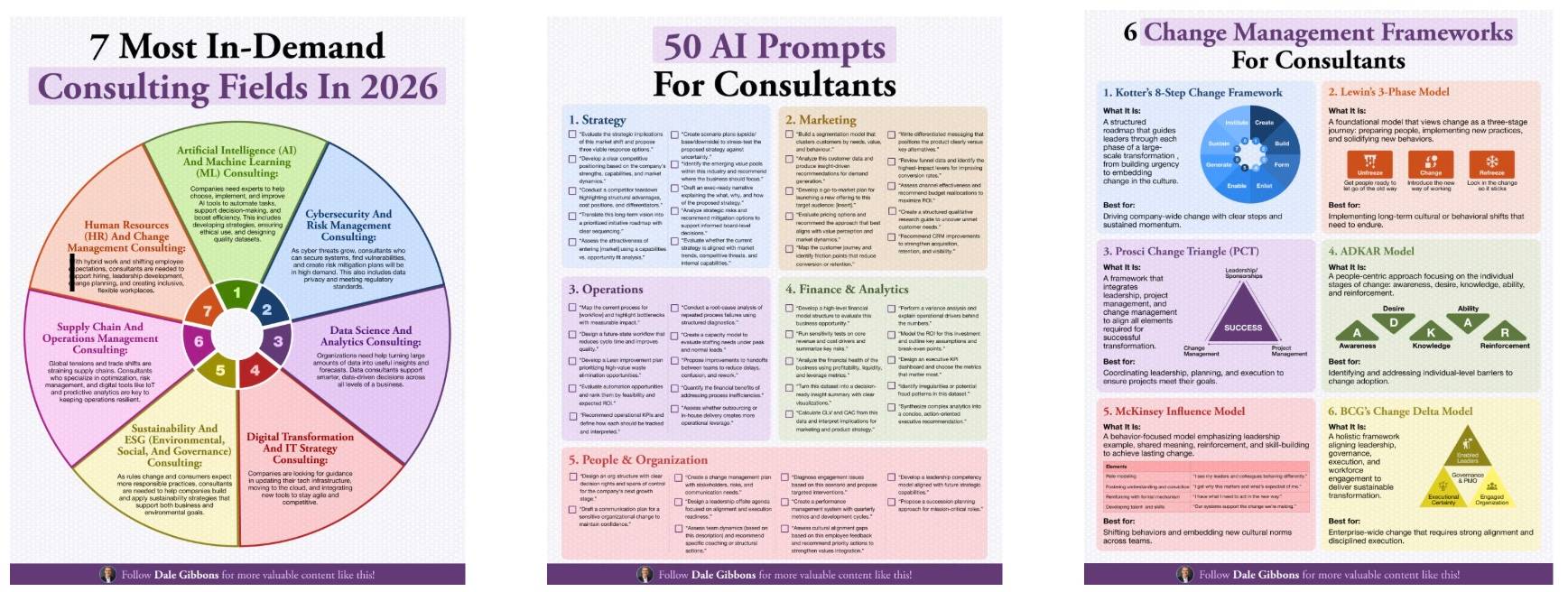
Make these insightful and actionable, while also easy to digest. Carousels and cheat sheets are the perfect format for this type of content.
Think: what is something my audience would find genuinely valuable enough to save and look at later when they need it?
3️⃣ Bottom of Funnel – Testimonials & Proof
Client results, lessons learned, behind-the-scenes. These posts make you human and are the main way to build trust (plus, authenticity is only becoming increasingly valued as AI-generated content dominates the platform). Here are a couple of examples from Dale:
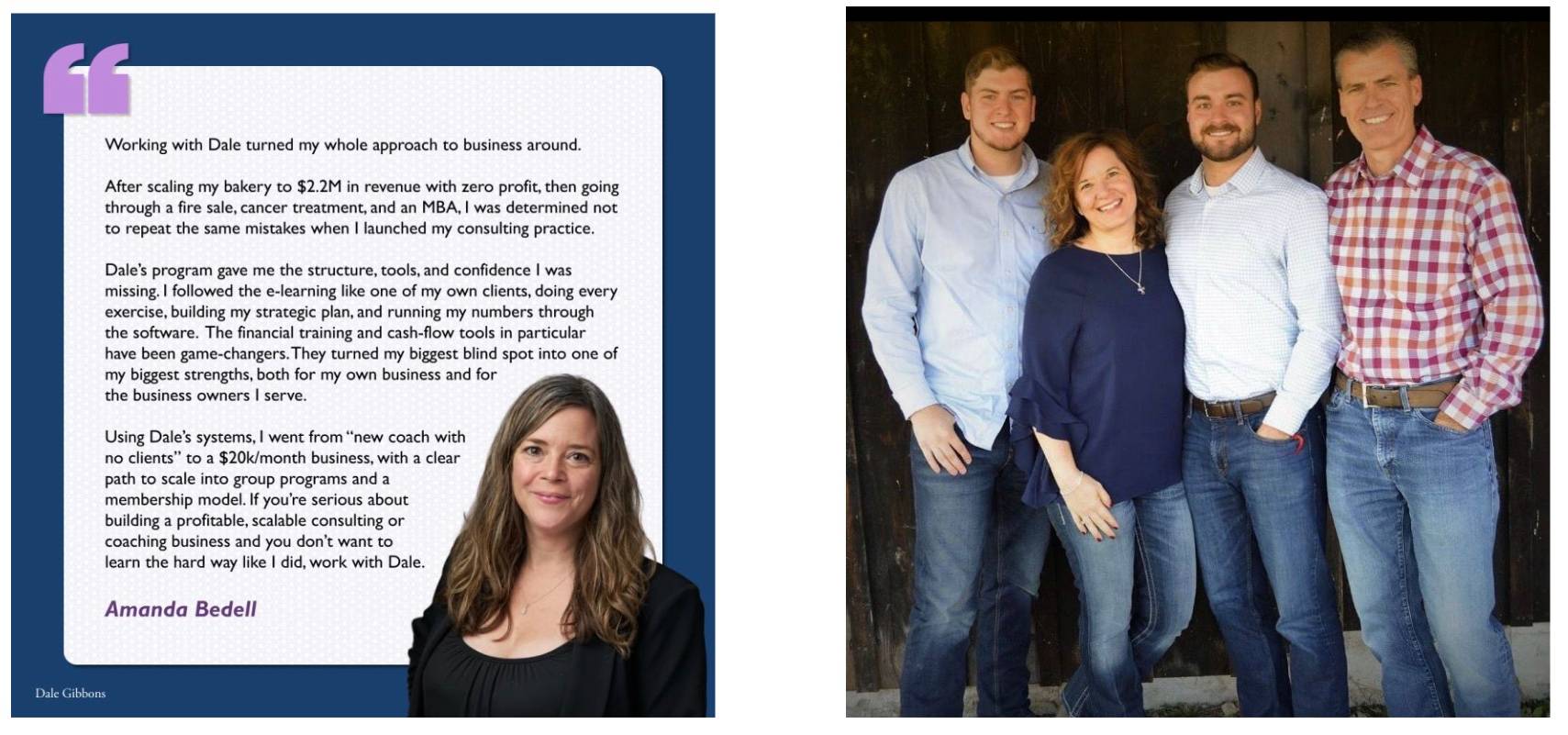
The pattern should always be: Reach → Teach → Prove. Each type of content has a job, and when you use them together, they move people down the funnel without you having to sell in every post.
Once you’ve got ideas for each of these, you can slot them into a larger framework that will work as your personal brand funnel.
How Dale Ties It All Together
This is how his full personal brand ecosystem works:
✅ Awareness
It starts with LinkedIn. Someone sees a post, finds it valuable, saves it, maybe follows. Over time, they start recognising Dale's name. That's the beginning.
But he doesn't rely on organic alone. He also runs targeted outreach via Sales Navigator, specifically going after independent consultants rather than ones at big firms like Accenture. These are people who actually need what he offers and have the autonomy to buy.
Both channels feed into nurturing.
✅ Nurturing
This is where most coaches lose people. They get attention but have nowhere to send it.
Dale uses lead magnets tailored to different ICPs and awareness levels:
For a 50-year-old still in corporate who's never even considered the consulting path, there's a quiz: "Are You Ready To Become a Consultant?" It meets them exactly where they are.
For a current consultant who already knows the game but wants to grow, there's a completely different quiz: a Buzzfeed-style "What's Your Consulting Growth Archetype?"
Then there's his newsletter, which offers weekly value, establishes his expertise, and keeps people warm until they're ready. He’s not selling every email, rather just staying top of mind.
✅ Conversion
For Dale, everything funnels into a webinar. That's where he gets the best conversions because he can teach, build trust, and pitch all in one session.
Other coaches might prefer a direct call booking or skip the webinar entirely. The format matters less than having a clear path from attention to action. Whatever converts best for your audience is the right answer.
What This Means For You
If you're a coach trying to build a consistent client pipeline, take these three things with you:
Always post with intent → Map your content to top, middle, and bottom of funnel. Each post should have a distinct job.
Your lead magnet should match your buyer’s awareness → Someone who doesn’t know they need you yet needs a different entry point than someone ready to buy.
Your ecosystem should move people from attention to nurture and then convert → Content alone doesn’t close deals. You need a system that guides people through each stage.
Build this once, and it works for you all year.
Until next time,
Nader 🫡
Frequently asked questions
Why do most coaches struggle to get clients consistently?
Every January, coaches set the same goal, get more clients, and by March most are back to hoping referrals come through. The difference between coaches who fill their calendars and those who do not is a system that attracts clients consistently instead of chasing them. LinkedIn has also become much noisier as the creator economy brought a wave of new competition, so buyers have more options and are pickier about who they trust. Anyone blending in is invisible.
What content moves someone from stranger to buyer?
Three types, each with a distinct job. Top of funnel awareness content appeals to the widest audience and stops the scroll. Middle of funnel educational content, such as frameworks, carousels, infographics and cheat sheets, positions you as the expert and gives people a taste of working with you. Bottom of funnel testimonials, client results and behind-the-scenes posts build trust. The pattern is always Reach, then Teach, then Prove, and used together these move people down the funnel without you selling in every post.
How should a lead magnet match buyer awareness?
Dale Gibbons uses different lead magnets for different ICPs and awareness levels. For a 50-year-old still in corporate who has never considered the consulting path, there is a quiz: "Are You Ready To Become a Consultant?" For a current consultant who already knows the game but wants to grow, there is a completely different quiz: "What's Your Consulting Growth Archetype?" His weekly newsletter then keeps prospects warm until they are ready, staying top of mind rather than selling in every email.
Do you need a webinar to convert coaching clients?
Not necessarily. For Dale, everything funnels into a webinar because that is where he gets the best conversions: he can teach, build trust and pitch in one session. Other coaches might prefer a direct call booking or skip the webinar entirely. The format matters less than having a clear path from attention to action, and whatever converts best for your audience is the right answer.
Related reads
About the author
Nader Alnajjar is co-founder of LeverBrands, where he builds personal brands and content ecosystems for founders and executives. More at leverbrands.com/about and on LinkedIn.